Why Trim at All
Dead wood is the first reason. Water oaks and pecans shed dead limbs all the time, and a dead branch the size of your leg falling from forty feet does real damage to a car or a person. Removing it on our schedule is far better than waiting for a thunderstorm to do it.
Weight is the second reason. Long, heavy limbs reaching out over the yard act like levers, and the Piedmont gives them plenty of tests: summer storms with sudden gusts and winter glaze that can add hundreds of pounds to a single limb. Shortening the worst of them and thinning out crossing branches lets the tree carry less sail, which is often the difference between a broken limb and a tree that rode out the ice.
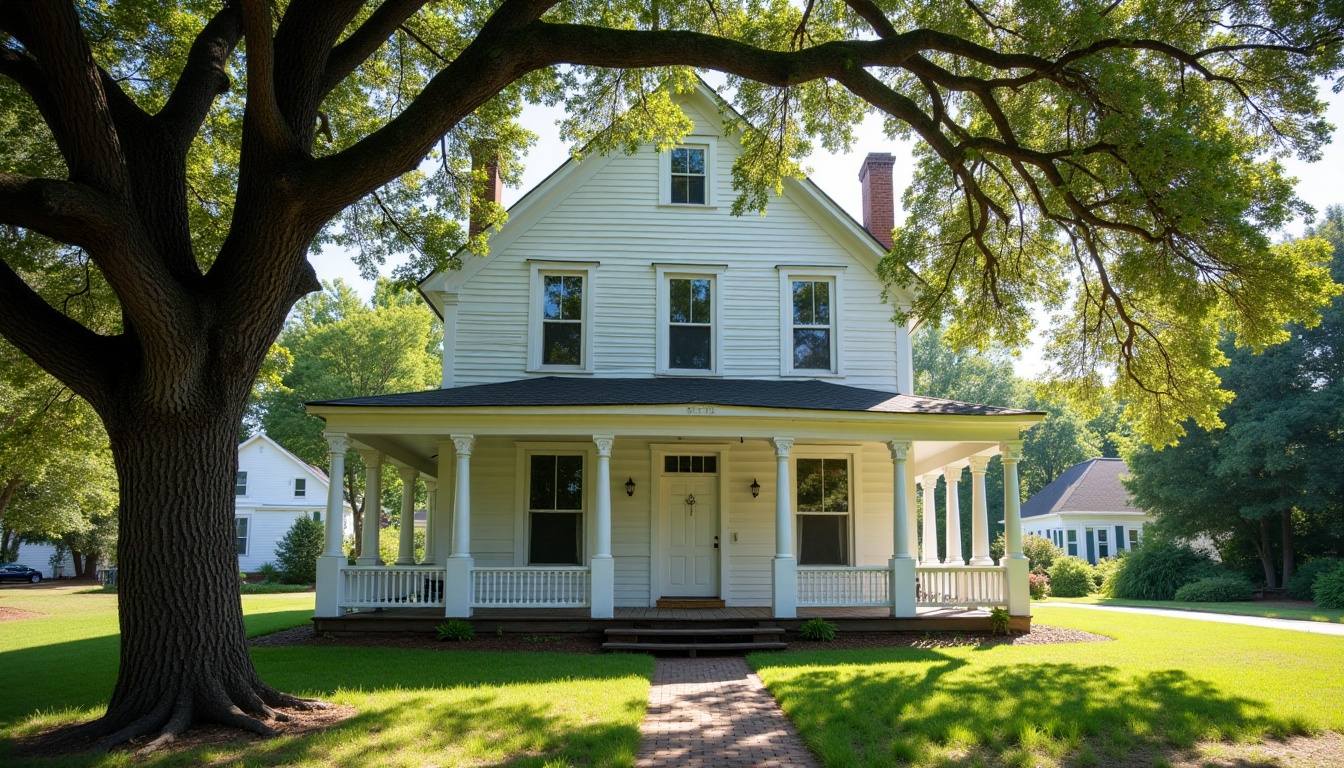
The third reason is the house. Limbs on shingles wear the granules off, keep the roof damp, fill gutters and give squirrels a road onto the roof. A crown so dense that no sun reaches the north side of the roof grows moss and algae there, and a yard under that same canopy struggles to hold grass.
The Cuts We Make
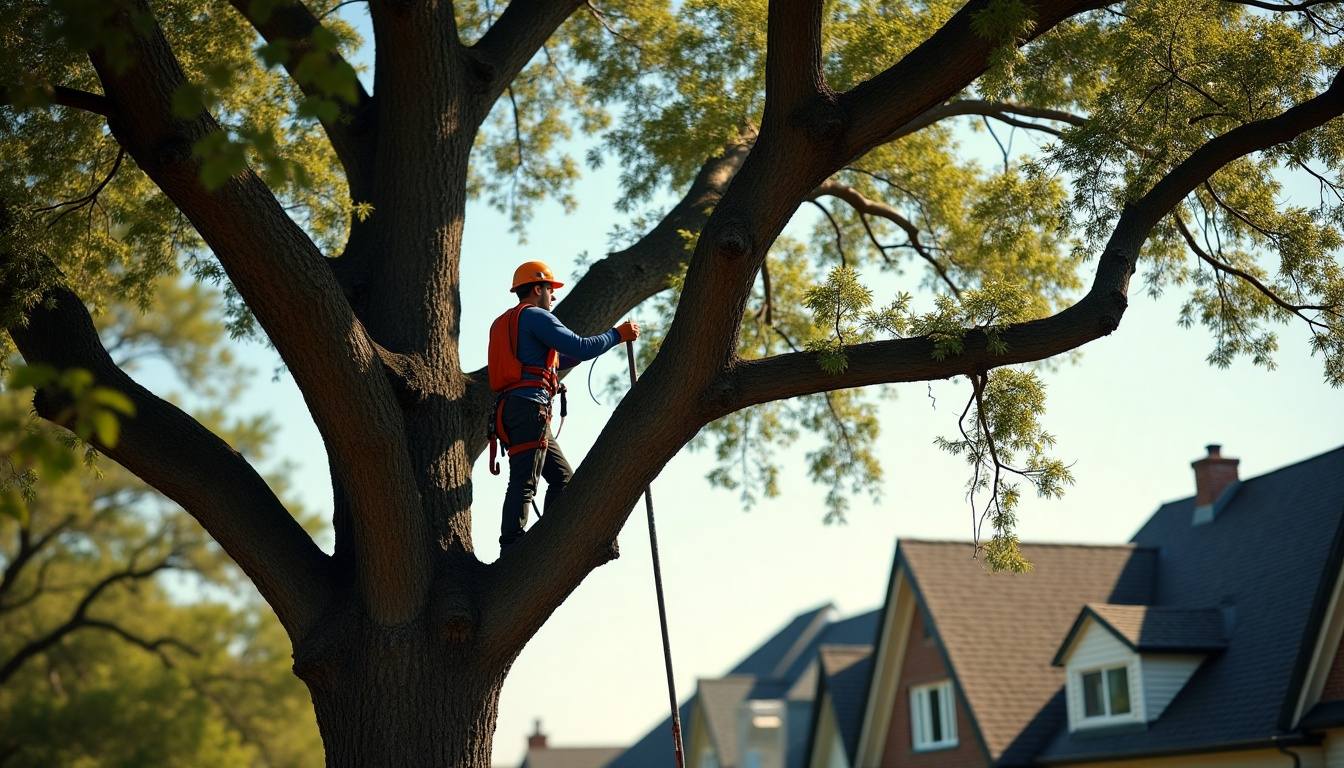
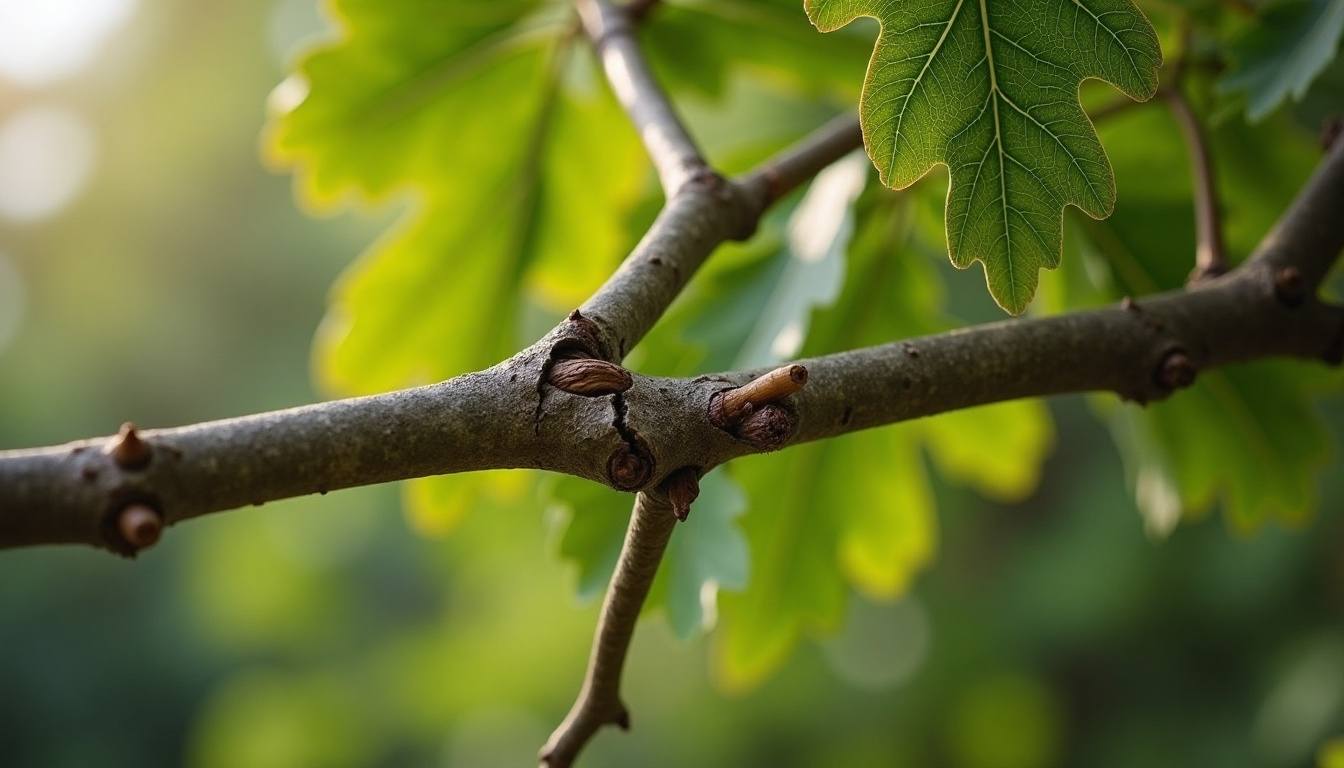
Every cut is made just outside the branch collar, the slightly swollen ring where a limb meets the trunk. Cut there and the tree seals the wound on its own; cut flush and you open the trunk to rot, leave a stub and it dies back. Heavy limbs come off in two or three cuts so the bark does not tear down the trunk under the weight.
Crown thinning removes selected inner and crossing branches so light and wind get through, without changing the outline. Crown raising lifts the lowest limbs for clearance over a drive, a walk or a roof. Reduction shortens a limb back to a healthy side branch big enough to take over. What we do not do is top trees. Cutting a crown back to stubs makes a flush of weak sprouts that grow back fast, attach poorly and break in the next storm, and a topped oak almost always rots at the cuts.
Clearing Roofs and Driveways
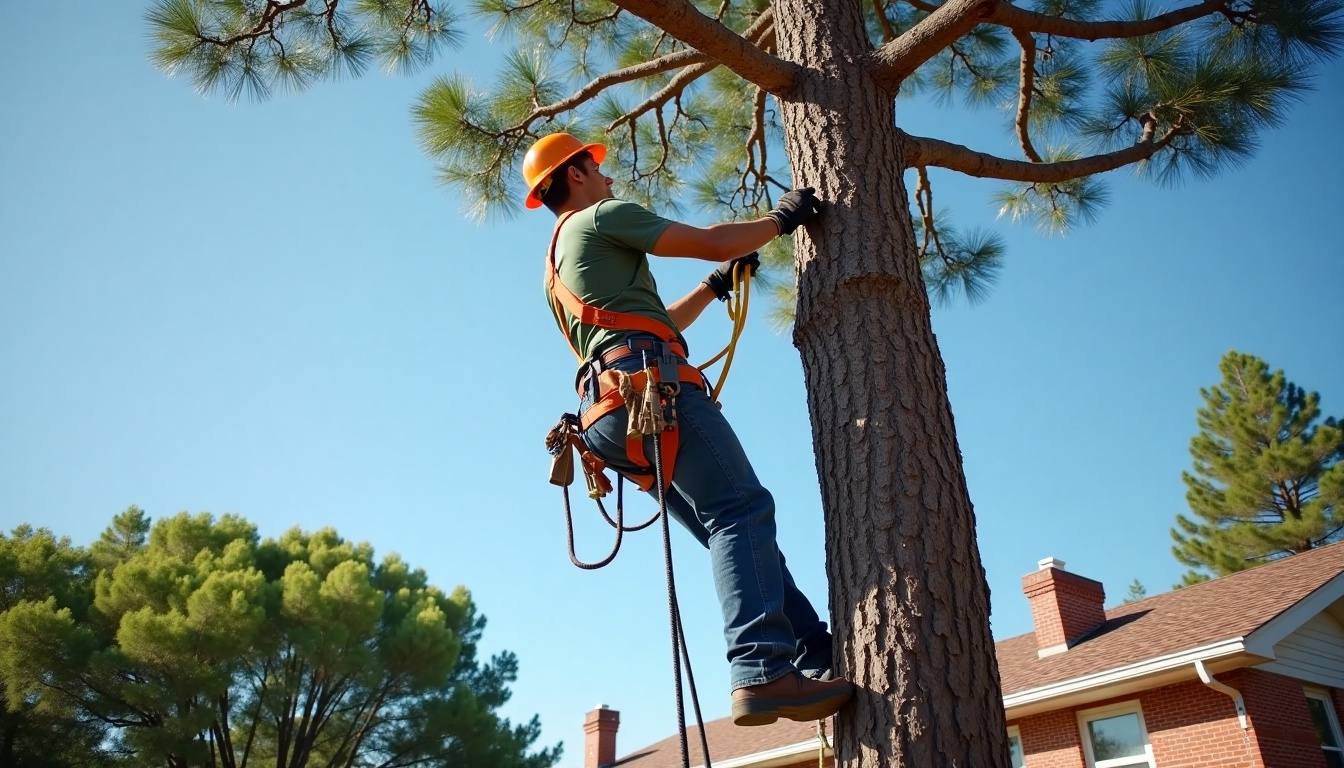
Around the newer subdivisions and older in-town streets alike, the common job is a big oak or pine planted too close to the house decades ago. We aim for a few feet of air between branch tips and shingles and enough height over the driveway for a box truck or an RV. Limbs near the service drop to the house get extra care, and anything touching the main lines on the poles is a job for the power company's own crews, which we will tell you plainly.
Pines over a roof are their own case. Loblolly limbs are brittle, and pine tops are the first thing to snap under ice. Sometimes the right answer is raising and deadwooding the pine; sometimes, if it leans hard toward the house, the honest answer is a conversation about taking it down instead.
Best Time of Year
Late fall through winter is the easiest season for most pruning. Hardwoods are dormant, leaves are off so the structure is easy to read, and fresh cuts have months to begin sealing before spring growth. It is also the right time to get heavy limbs off before ice season sets in.
Pines are better trimmed in the cooler months too. Fresh pine wounds give off a resin smell that draws bark beetles, and in a hot, dry stretch a stressed pine has little defense. Light deadwood work and clearance cuts can happen any time of year, and a cracked limb hanging over a bedroom should not wait for winter. Work in the hot months is mostly limited to dead wood, damage and clearance, not heavy reductions.
A Look at the Tree's Health
Every trim visit starts with a walk around the trunk and a look up into the crown. We check for fungus at the base, cavities, cracks below forks, dead tops, thin foliage and signs of beetles on pines. If something we see means the tree is likely to fail, we tell you, even if all you asked for was clearance over the driveway.
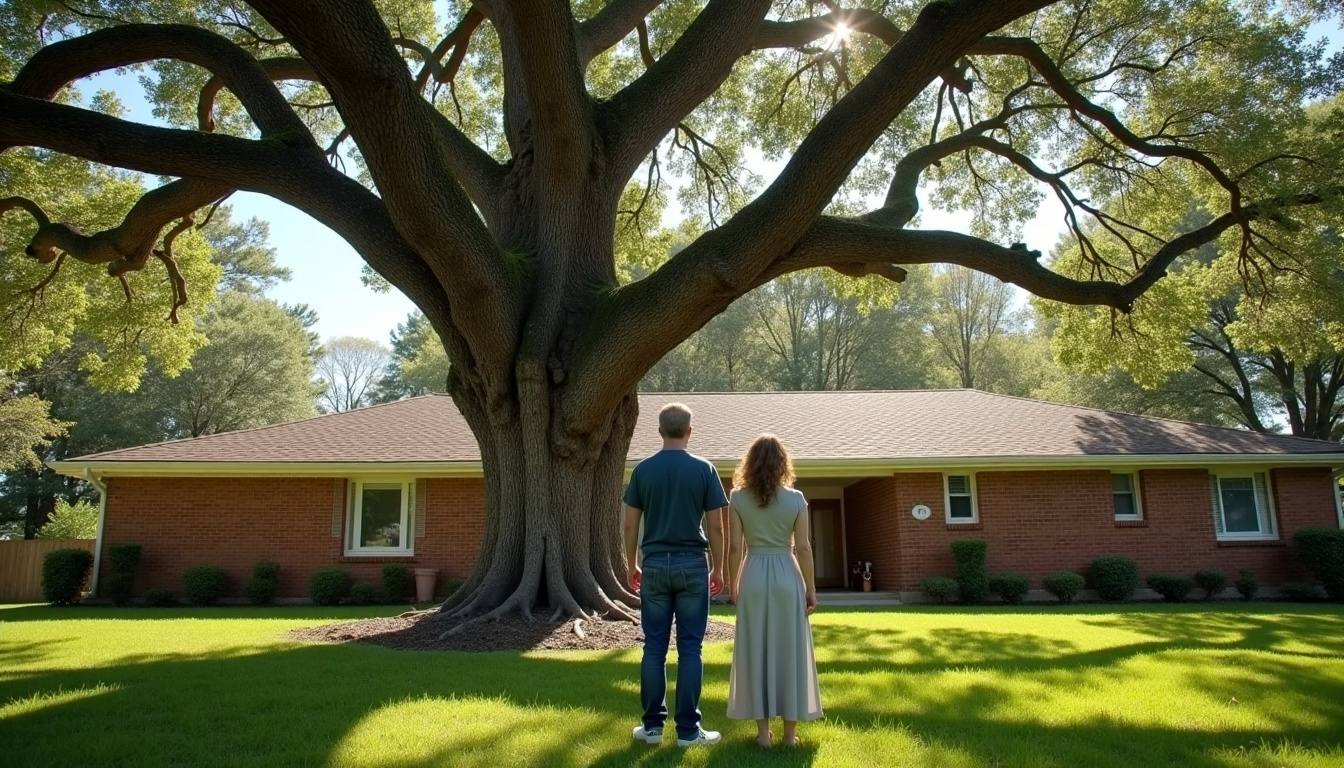
People in Hodges, Abbeville and around the county often ask for a straight opinion on whether a big tree is safe to keep near the house. We give one in plain words. If you want a credentialed second opinion on a valuable or historic tree, the ISA keeps a public directory for finding an arborist by area, and it is a good place to start. For trees out on rural property, we also handle jobs out on the Hodges side of the county.
Related
Tree Removal Around Hodges
We handle storm-thrown pines, dying oaks and trees over sheds, with a free quote.