The First Hour After a Tree Falls
Get everyone out of the rooms under the impact and keep people and pets away from the tree. Look for wires before you look at anything else. A tree that came down through lines can energize the trunk, the fence it is lying on and the wet ground around it, so if any line is involved, call the power company and stay well back until they say it is dead.
Do not start cutting a storm-downed tree yourself. Fallen trunks and bent limbs are full of stored tension, and a cut in the wrong place can make a piece jump sideways or roll. A tree resting on a roof may also be the only thing holding a broken rafter in place. If water is coming in, shut off power to that part of the house if it is safe to reach the panel, and catch what you can until the tree is off.
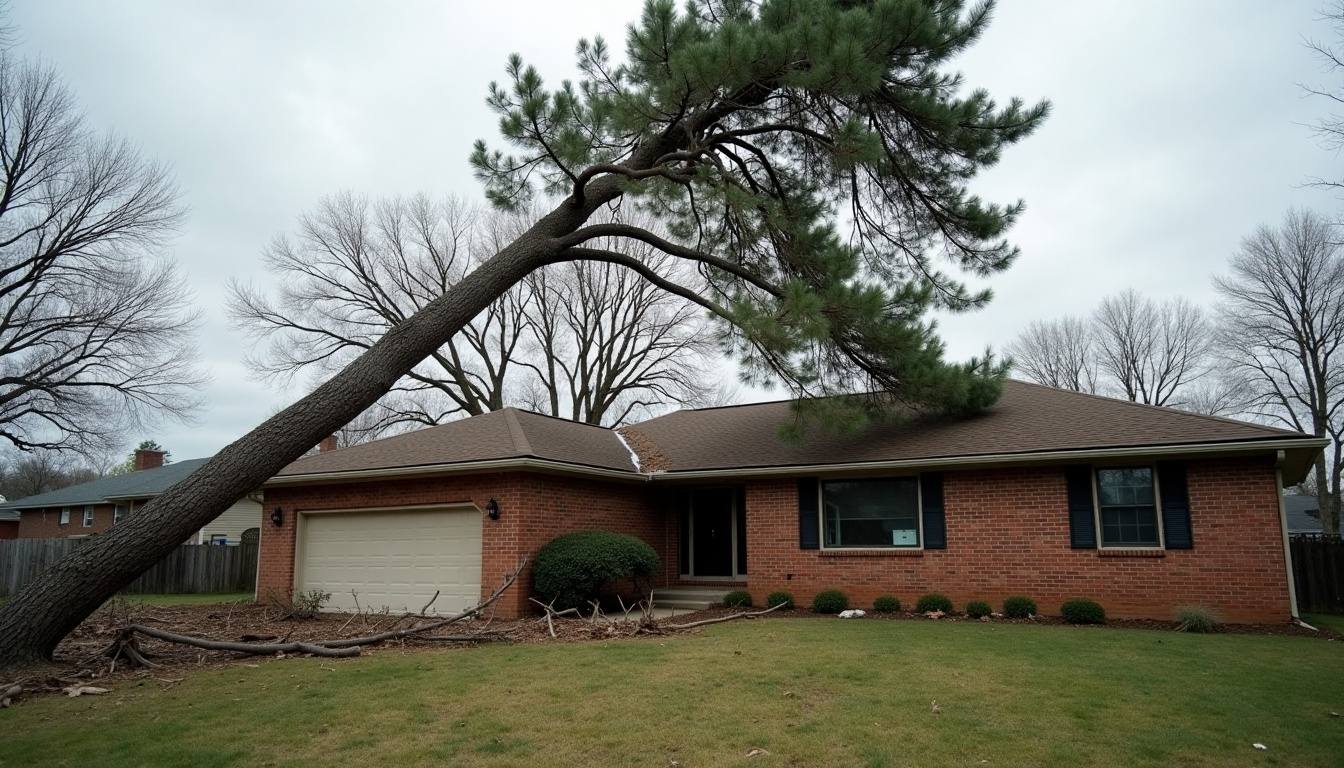
When a Tree Is on the Roof
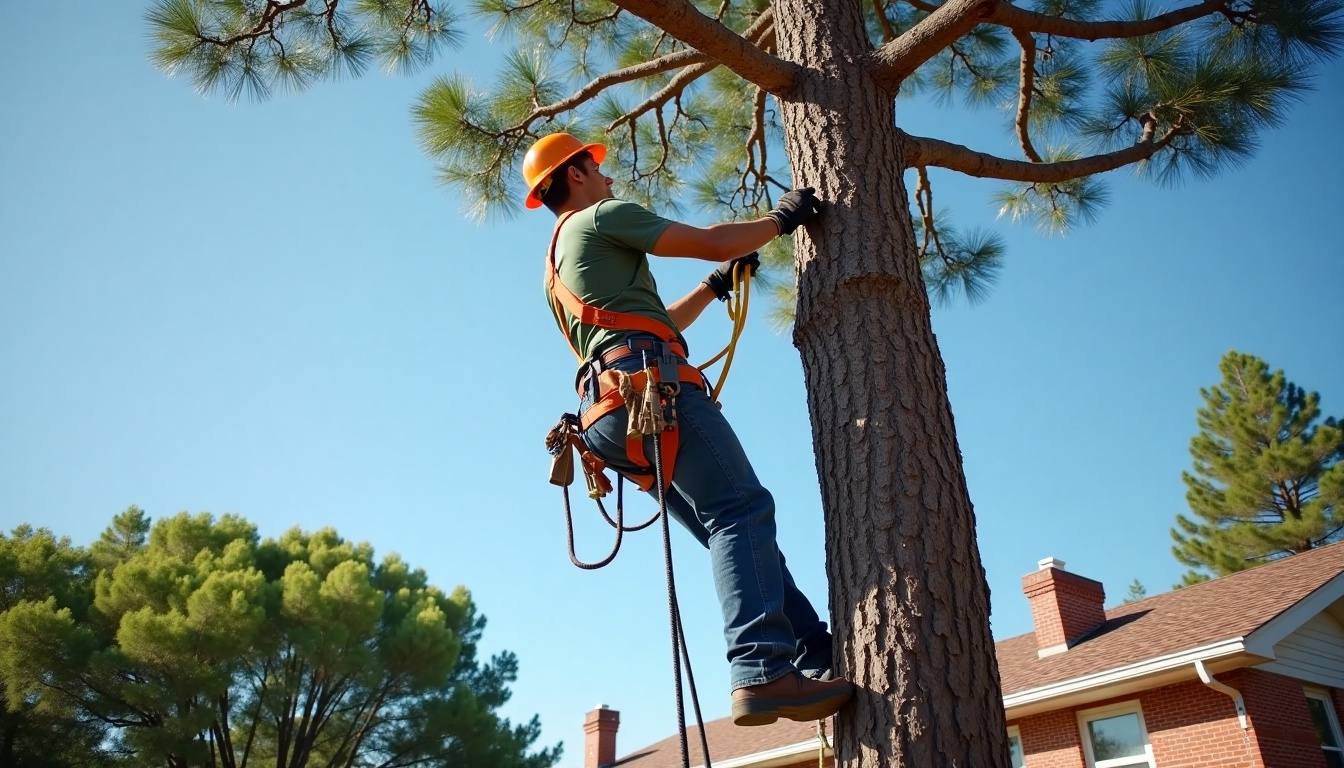
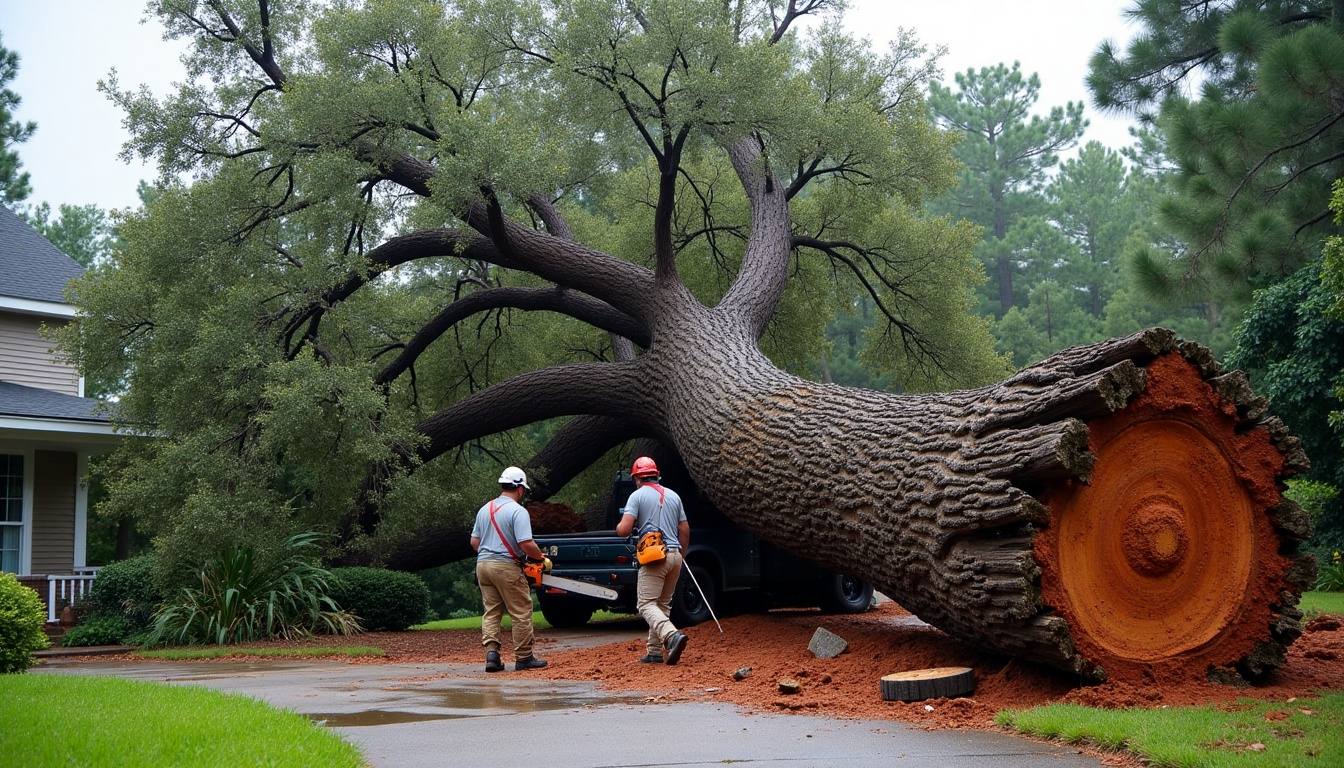
A tree on a house comes off the same way it would come down standing: from the top, in pieces, with each piece controlled. The crew starts with the outer limbs, then takes weight off the trunk a section at a time so the roof is not loaded further. Big trunks lying across a house usually need a crane to lift them clear; trying to roll them off with a saw is how a dented roof becomes a collapsed one.
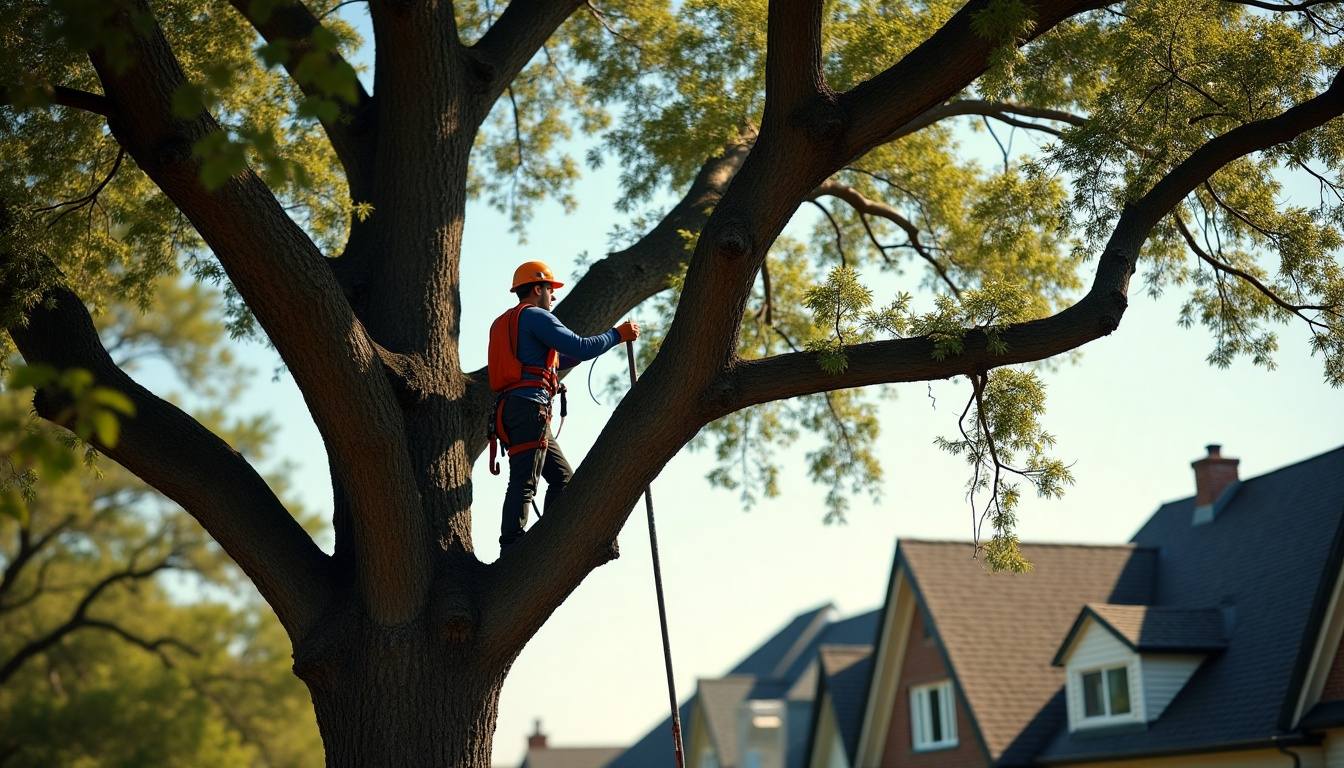
Once the tree is off, the roof needs to be dried in. We can clear and stage the area so your roofer or a tarping crew can get to the hole right away. If the tree that hit the house left its neighbors cracked or leaning, a follow-up thinning and deadwood visit on the trees still standing is worth doing before the next storm.
Ice Storms, Helene and the Next One
Greenwood gets trees down from three kinds of weather. Summer thunderstorms bring short, violent gusts, often after days of rain have softened the red clay, and the trees that fail are the shallow-rooted ones that tip over whole. Winter ice is slower and sneakier: a quarter inch or more of glaze on every twig adds enormous weight, pine tops snap off, sweetgum and water oak limbs split at the forks, and the cracking can go on all night. The February 2014 ice storm left limbs down all over the Piedmont, and broken limbs left hanging in a canopy after a storm like that can come down weeks or months later.
Then there are tropical remnants. Hurricane Helene in late September 2024 drove hurricane-force gusts well inland, and trees went down across Greenwood County by the thousand, with power out for days in many neighborhoods. The local paper's coverage of that week shows how widespread it was. Many of the trees still standing from that storm have cracked limbs and loosened roots that will not hold the next one, and those are worth a look before hurricane season comes around again. We see the same leftover damage in Saluda and the pine country southeast of the lake.
Photos and Paperwork for Your Insurer
If you plan to file a claim with your homeowner's insurer, take your own photos and video before anything is moved: the tree where it landed, the point of impact, the root plate or broken trunk, and any damage inside. Wide shots and close-ups both help. Many policies treat a tree that hit a covered structure differently from one that simply fell in the yard, so the pictures of where it landed matter.
When we come out, we write down what was done: which tree, what it was resting on, how it came off, and what was hauled away. That written description of the work is something you can hand your adjuster along with your own pictures. We do not handle claims or speak for any insurer, and your policy and adjuster decide what is covered.
Cleanup and Debris
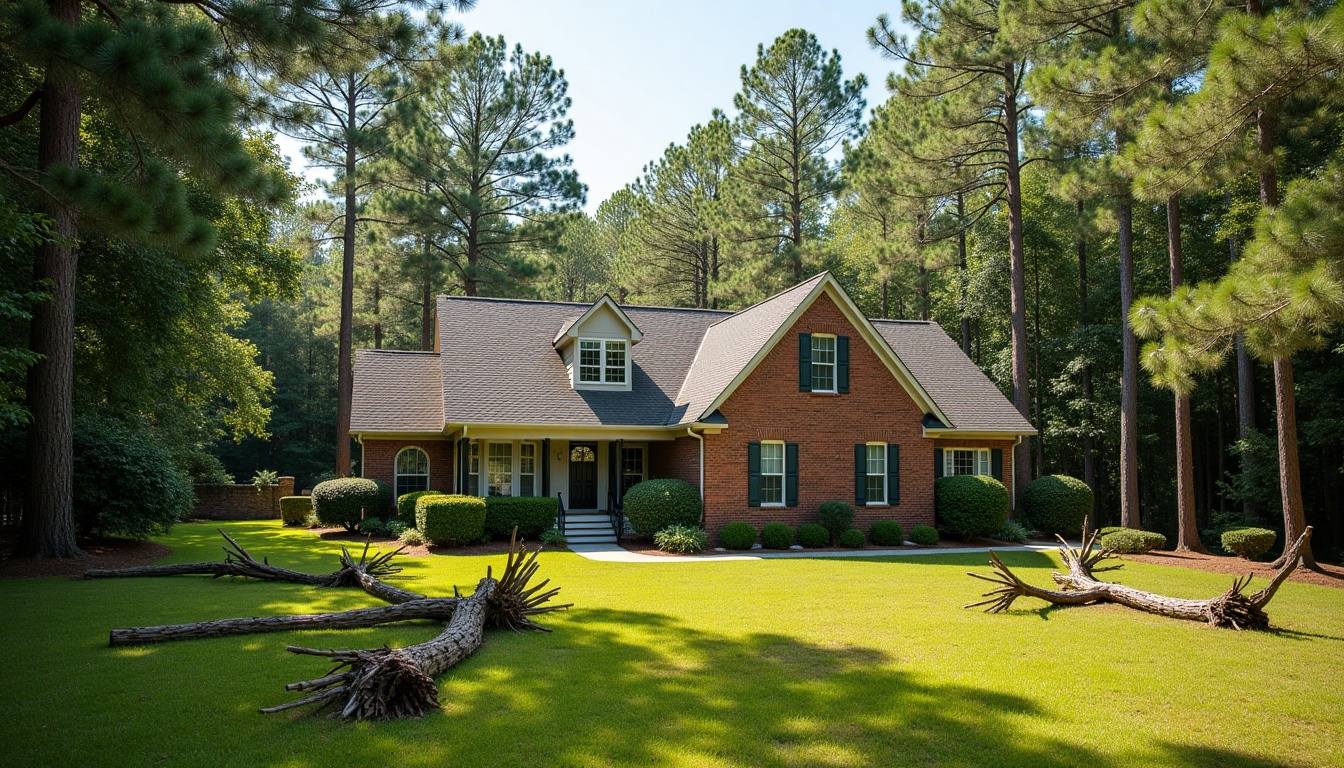
Storm jobs leave a mess well beyond the main trunk: broken limbs in the yard and on the roof, splintered tops stuck in other trees, and root plates standing on end with a crater beside them. We chip the brush, cut and haul or stack the wood, and clear what is hanging. Upturned root plates can be cut down and the hole filled, and the stump left behind can be ground once the ground dries out.
After a big storm, jobs are worked in order of danger. Trees on occupied houses and trees blocking the only way out come first, then trees on cars and outbuildings, then trees down in open yard. Every tree job is priced after someone has walked the yard and looked up into the tree, with the price in writing before a saw starts. On a storm job, that walk-through happens as soon as it is safe to stand under what is left.