Grind It or Pull It?
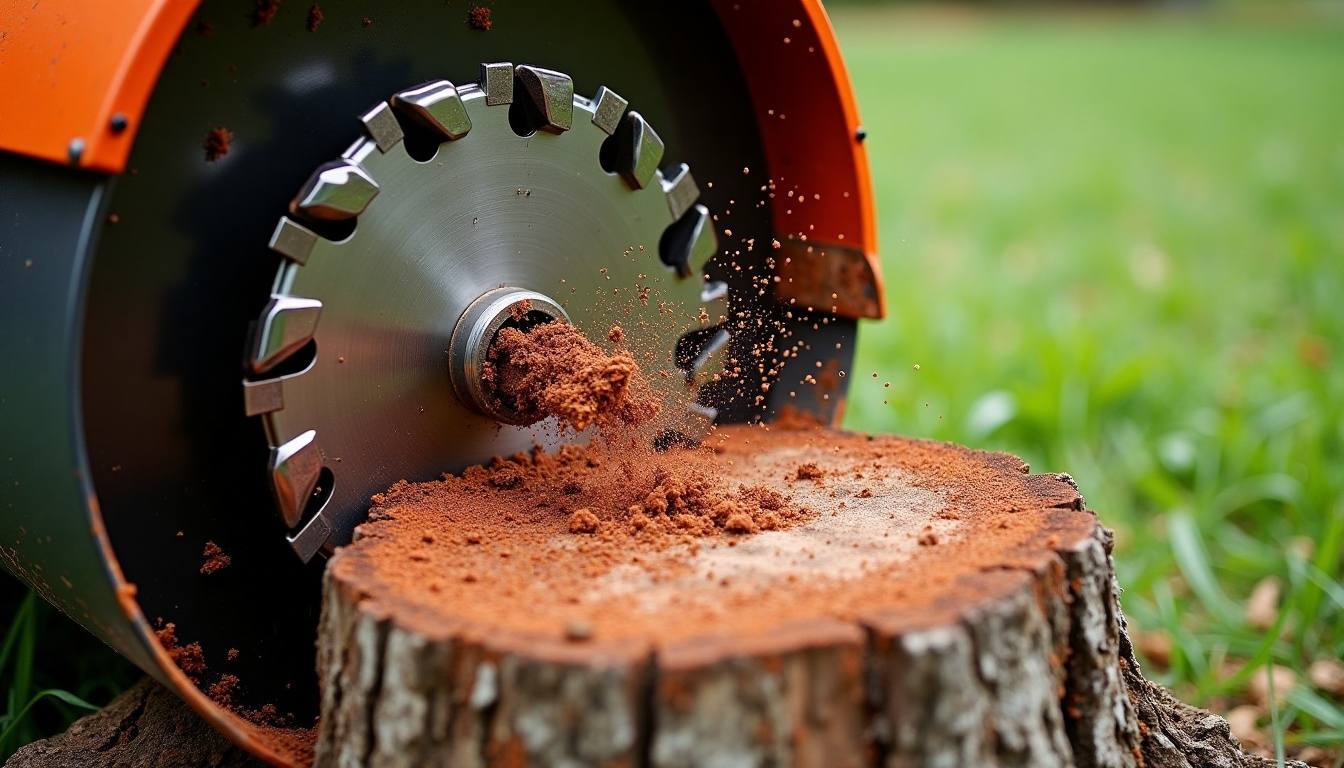
Pulling a stump out whole with an excavator rips up a wide circle of yard, leaves a crater and drags up clay that is hard to grow anything in. It makes sense on a lot being graded for a build, where the ground is getting torn up anyway. In a finished yard, grinding is almost always the better choice: the machine works right at the stump, the lawn around it barely knows anything happened, and the hole fills with its own chips.
Chemical stump killers and burning are slow and uneven, and burning a stump inside a neighborhood is a bad idea for plenty of reasons. Compact grinders fit through a backyard gate, and larger machines handle big oaks and pine stumps on open ground, so access is rarely a dealbreaker.
How Deep We Go
A standard grind takes the stump down several inches below the surrounding grade, enough for sod or seed to take over the spot. If you plan to plant a new tree near the old one, set pavers, pour a slab or run a fence post through the area, tell us in the message and we will go deeper and wider so nothing woody is left where you need to dig.
Before any grinding starts, buried lines get marked through SC 811. Gas, water, electric, cable and irrigation lines often run right past old trees, and a grinder wheel finds them fast. Private lines such as a sprinkler system, a line to a shop or a dog fence are not marked by the utility locators, so tell us about anything you know is buried near the stump.
Roots and Regrowth
Some trees quit when the trunk is cut, and some do not. Pines will not sprout back from the stump. Sweetgum, tulip poplar, maple and several oaks will push up suckers from the stump and the roots for a season or two, and sweetgum in particular can send up a ring of shoots across the yard. Grinding the stump and the root flare well below grade stops most of that, and any stray sprouts that show up afterward can be mowed or clipped until the roots run out of energy.
Surface roots are the other half of the job. Water oaks and willow oaks in clay soil tend to run thick roots right along the top of the ground, sometimes twenty feet or more from the trunk. We can grind out the ones that heave the lawn or catch the mower, within reason, without trenching the whole yard.
After the Grind
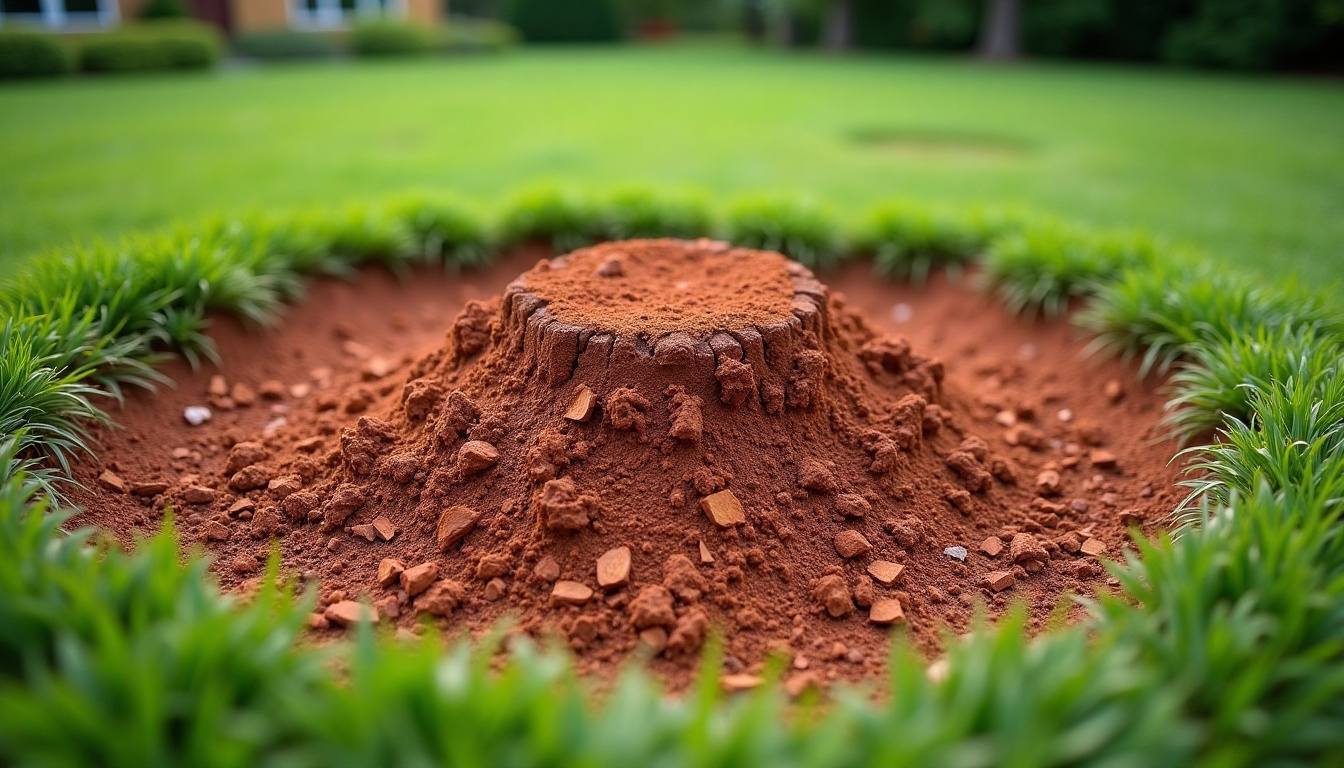
Grinding a big stump makes a surprising pile of chips mixed with soil. You can keep them as fill in the hole, use them as mulch in beds, or have us rake them out and haul them away. If you are planning grass, the better approach is to clear most of the chips, fill with topsoil and let it settle; fresh wood chips pull nitrogen from the soil as they break down, and grass seeded straight into them tends to come up yellow.
Expect the spot to settle a little over the next few months as the remaining roots rot, more so in wet clay. A second load of soil after a season usually levels it out. Bermuda and centipede lawns will creep back over a well-filled hole on their own during the growing season, while fescue in a shady spot does better reseeded in early fall.
If a slab, a shed pad or a paver patio is going over the spot, let us know before we start. Those jobs call for every chip pulled out and the hole backfilled with compacted soil or gravel, because buried wood keeps rotting and settling under anything built on top of it.
Stumps From Old Jobs and New Ones
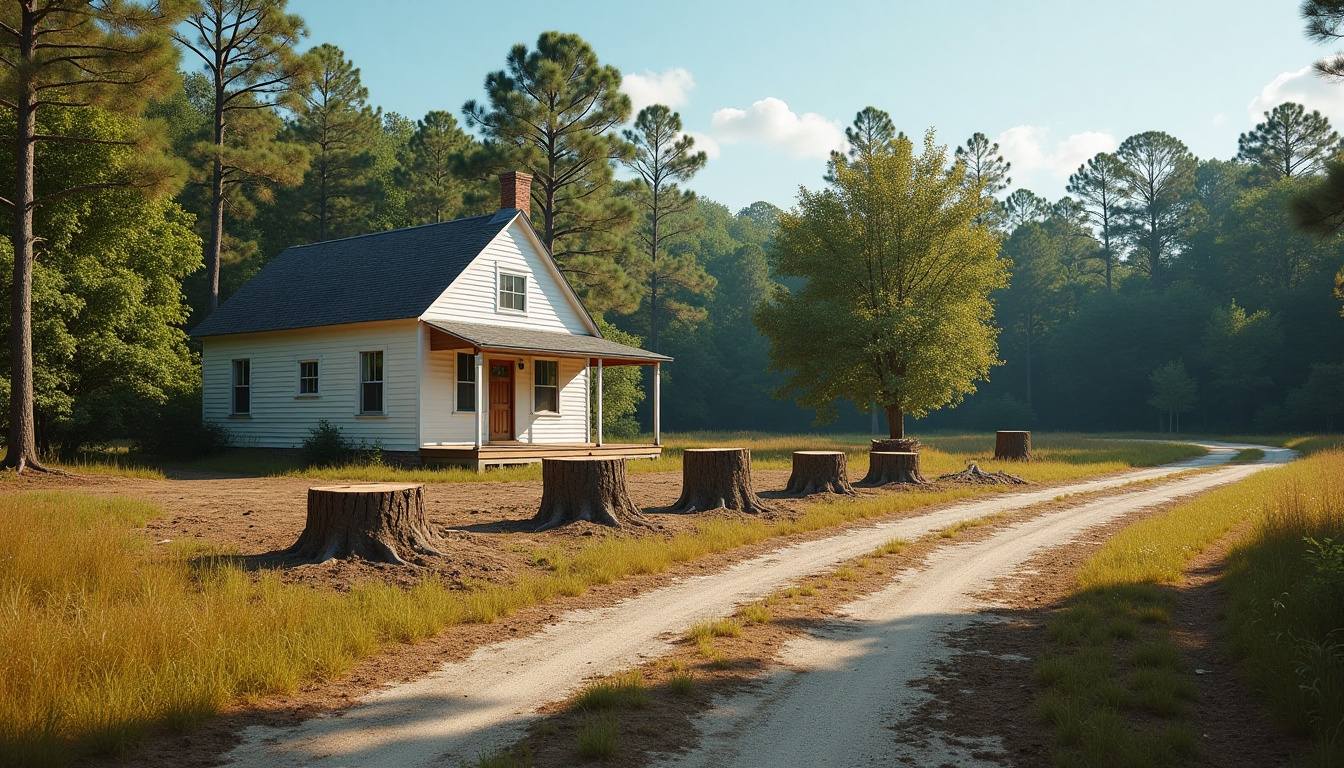
Much of our grinding follows a removal we just finished, but plenty of calls are for stumps left by someone else years ago, or a row of them along a property line. We also grind as part of clearing a whole lot, where dozens of stumps need to go before a driveway or house pad can be cut. Folks in Bradley and the country roads west of Greenwood send us stump jobs too.
Grinding is priced by the number of stumps, their size, the species, how many surface roots you want chased, access for the machine and what you want done with the chips. Every tree job is priced after someone has walked the yard and looked up into the tree, with the price in writing before a saw starts. If the tree is already gone, a look at the stump itself is all we need.
Related
Land and Lot Clearing
Land and lot clearing in Greenwood, SC for new builds, fence lines and pasture: brush, vines, saplings and small trees cleared while the good hardwoods stay standing.